
Helpful Tips for Traveling with Dystonia
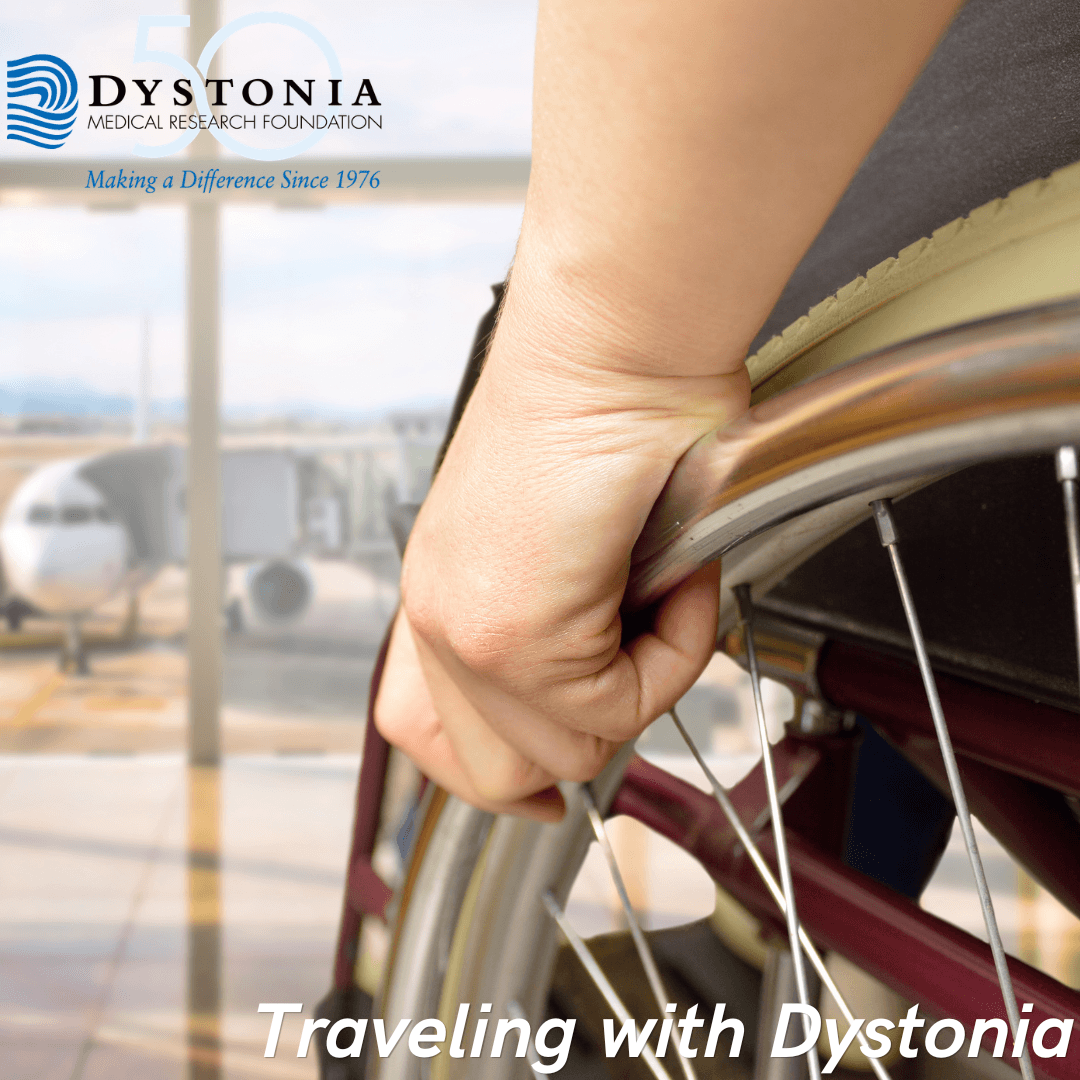
Traveling by airplane during the busy summer travel season means more crowds and possible delays for everyone, and a trip to the airport can present some unique challenges to individuals with dystonia. Pre-planning is critical. Individuals with mobility issues might need to request a wheelchair at least 48 hours in advance of their flight. People with speech challenges may benefit from having a companion speak on their behalf at the airport. An Animal Air Transportation Form has to be filled out in advance for a service animal.
Before it’s time to catch that flight, here are a few basic tips for navigating the airport and security checkpoints with a condition like dystonia.
1. Always arrive early at the airport.
If you have a DBS device, you may not be able to go through regular screening, depending on the manufacturer and year of implant. Notify a TSA agent right away, explaining that you have an internal medical device and need to be pat-down. Sometimes this process is smooth, but other times it can be challenging to get their attention or explain your needs. Give yourself plenty of extra time for any scenario.
2. Pack all essential items in your carry-on, such as medications and DBS charging equipment.
If these don’t fit, you’re allowed to bring an additional bag specifically for medical supplies or medical equipment at no extra cost.
3. If you use a mobility device, know your rights, and clearly communicate your needs.
Contact the airline ahead of time if you’re bringing a personal mobility aid or need assistance getting to and from the plane. Before storing your wheelchair, remove any parts that could fall off, like footrests, headrests, or cushions. You can also request a seat for you and your caregiver in the bulkhead of the plane (the physical partition that divides a plane into different classes or sections) or near the restroom if mobility makes it difficult to navigate inside the plane.
4. Communication is crucial.
Whether you’re at the airport or on a train, clearly express your needs. People often assume everyone is able-bodied, so don’t hesitate to request assistance or specific accessibility features to ensure a smooth travel experience. For people with speech issues like laryngeal dystonia (spasmodic dysphonia) or gait issues that might appear like intoxication to the untrained eye, consider contacting the airline in advance about your special needs, or arrange for a traveling companion to communicate those needs to airline personnel.
The Importance of Knowing Your Rights
According to the U.S. Department of Transportation (DOT), the Air Carrier Access Act (ACAA) makes it illegal for airlines to discriminate against passengers because of their disability or require a person with a disability to travel with another person, except in certain limited circumstances where the rule permits the airline to require a safety assistant at no extra charge. The ACAA applies to all flights to, from, or within the United States.
As stated on the DOT website: “The disability regulation requires airlines to provide passengers with disabilities many types of assistance, including prompt wheelchair or other guided assistance to board, deplane, or connect to another flight; seating accommodation assistance that meets passengers’ disability-related needs; and assistance with the loading and stowing of assistive devices. The assistance airlines provide to passengers with disabilities must be performed in a safe and dignified manner.”
Disability-Related Complaints
The DOT also notes that “If passengers with a disability experience a difficulty during air travel when using or attempting to use a carrier’s services, they should ask to speak to the airline’s expert on disability related issues who is known as the airline’s Complaint Resolution Official (CRO). An airline is required to make a CRO available in a timely manner, which may be by phone, during all times that an airline is operating at that airport.
“If passengers can’t resolve the problem at the airport, they may want to file a complaint with the airline. DOT requires airlines to acknowledge and respond to consumer complaints. If the airline does not resolve the issue to the passengers’ satisfaction, they may want to file a complaint with DOT.”
With thoughtful preparation and a clear understanding of your rights, traveling with dystonia can be a smoother, less stressful experience. Planning ahead, communicating your needs, and advocating for yourself can help you access the accommodations and support you need. With the right preparation, you can spend less time worrying about the journey and more time enjoying your destination.