
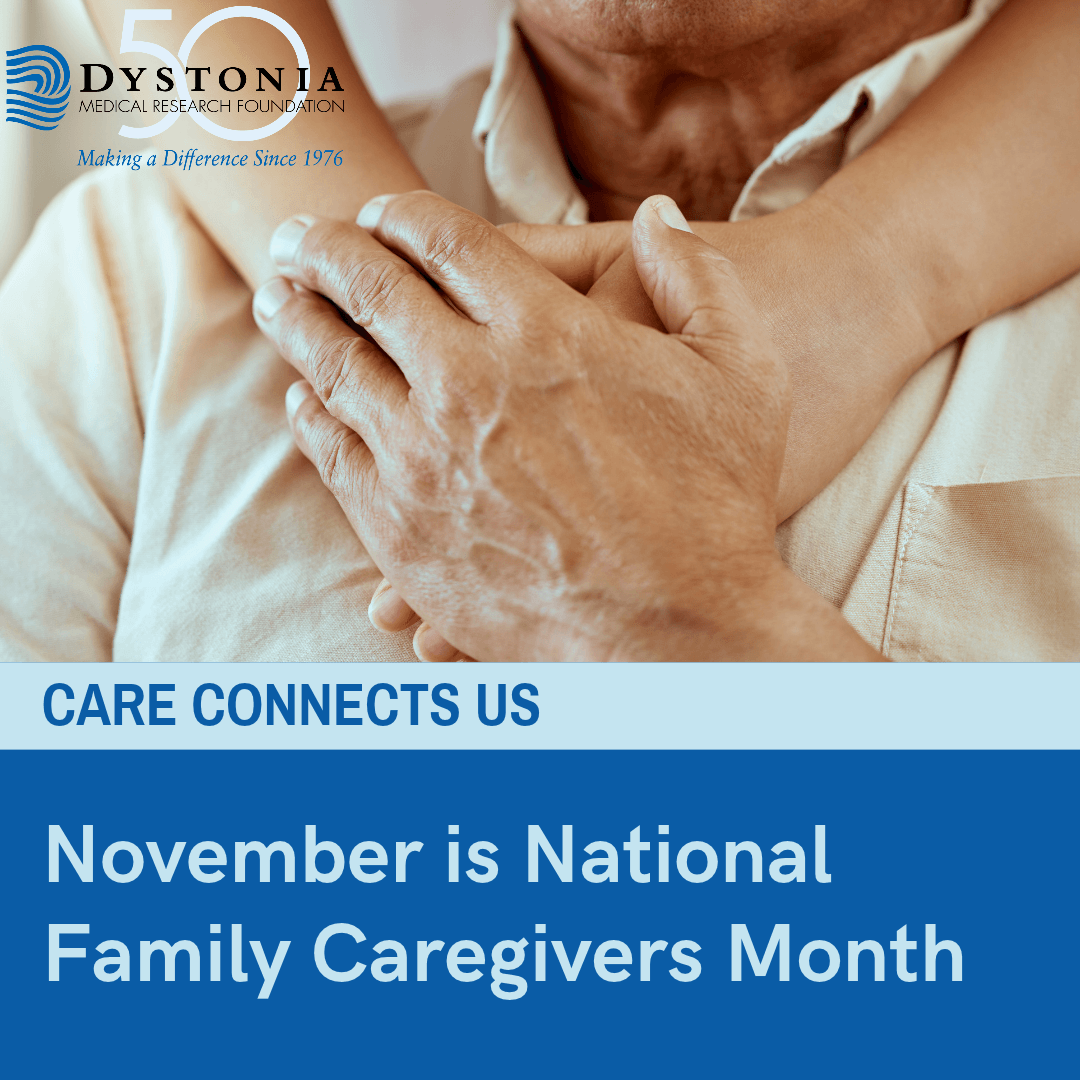
November is National Family Caregivers Month
The theme for the 2026 National Family Caregivers Month is “Care Connects Us.” The Caregiver Action Network defines a caregiver as “anyone who helps another person manage their health, daily needs, or overall well-being—often without pay.” This may include:
In addition to caregiver resources that are available on the Caregiver Action Network website, the DMRF website has additional caregiving content:
Avoiding Burnout as a Caregiver: (Winter 2024 Dystonia Dialogue article)
Dystonia Caregiver: Webinar featuring Natalie Hellmers, PhD, RN, ACNP-BC, Nurse Practitioner of Weill Cornell Medicine, Department of Neurology
In both DMRF resources, Dr. Hellmers recommends several strategies to ensure that caregivers don’t neglect their own well-being and stay healthy while delivering the best care possible:
Get to Know the Care Team: Dystonia often requires a multidisciplinary approach, involving neurologists, physical therapists, and other specialists. Knowing the team allows the caregiver to coordinate care more efficiently and creates a network of support for the caregiver and patient. Being familiar with the medical team allows you to ask the right questions, seek second opinions if needed, and ensure that the care provided is in the best interest of your loved one.
Seek Out Resources: Physical therapists and social workers can be important members of the treatment team for persons with dystonia and their caregivers. A case-by-case assessment may be necessary to make sure that the patient’s needs are being met.
Find a Support Group: As a caregiver, seeking support from a support group can be incredibly valuable in navigating the challenges of caring for a loved one with dystonia. Support groups provide a space to connect with others who are experiencing similar struggles, offering emotional comfort, practical advice, and a sense of community. To find a local support group, visit the support group page on the DMRF website. If caregivers begin to feel overwhelmed or experience symptoms of burnout, such as chronic fatigue, irritability, or depression, it may be time to seek professional help. A therapist or counselor can provide support and strategies for coping with the emotional challenges of caregiving.
Consider Respite Care: Caregivers can seek respite care for their loved ones by exploring various resources available within their community. Respite care provides temporary relief from caregiving duties, allowing caregivers to rest and recharge. Start by contacting local healthcare providers, such as hospitals, clinics, or social workers, who can recommend respite care programs or facilities that specialize in caring for individuals with dystonia or other chronic conditions. Community centers, senior services, and religious organizations may also offer respite care services or connect you with volunteers who provide in-home assistance.
Caregiving for a loved one with dystonia is a significant responsibility that requires physical, emotional, and mental strength. By prioritizing self-care, seeking support, and adopting strategies to manage stress, you can reduce the risk of burnout and continue to provide compassionate care.