
School Support for Children with Dystonia: 504 Plans and IEPs
For children with dystonia, symptoms such as involuntary movements, muscle contractions, abnormal postures, fatigue, pain, or difficulties with writing, walking, or speaking can create barriers at school. Two tools that may help are 504 Plans and Individualized Education Programs (IEPs).
A 504 Plan, provided under Section 504 of the Rehabilitation Act, helps ensure that a student with a disability has equal access to education by providing accommodations. For a child with dystonia, accommodations might include extra time for tests and assignments, assistive technology such as speech-to-text, alternative ways to complete written work, additional time between classes, appropriate seating, rest breaks, or access to physical or occupational therapy when appropriate.
An IEP, provided under the Individuals with Disabilities Education Act (IDEA), is designed for students who qualify for special education and related services. In addition to accommodations, an IEP can include specialized instruction, measurable educational goals, and services such as occupational, physical, or speech therapy.
Having dystonia does not automatically qualify a child for either plan. Eligibility depends on how the disability affects the student’s education and, for an IEP, whether the student meets IDEA eligibility requirements. Some students may need only accommodations through a 504 Plan, while others may need the more comprehensive services provided through an IEP.
Start With Your Child’s Individual Needs
Dystonia can affect children differently, and academic performance does not always tell the whole story. A child may understand classroom material but have difficulty demonstrating that knowledge because writing is slow or painful, typing is difficult, movement between classes takes longer, or fatigue affects participation.
Parents can help by working with the school to identify the specific barriers their child experiences and the support that would allow them to participate more fully. Plans should reflect the child’s strengths as well as their challenges and can be updated as needs change.
For families, the goal is not to lower expectations. It is to remove barriers so children with dystonia have a fair opportunity to learn, participate, and succeed at school.
This article provides general educational information and is not legal advice. Families should consult their school district regarding eligibility, evaluation procedures, and their child’s specific educational needs.
Dystonia Book for School Aged Children Available on DMRF Store
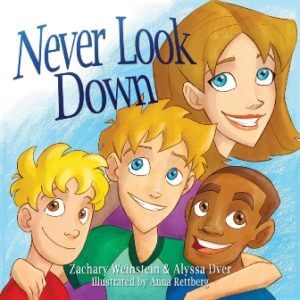
Zachary Weinstein and his mother Alyssa Dver wrote a book entitled Never Look Down in partnership with the DMRF so that other children like Zachary feel empowered, not diminished, by dystonia. The title is taken from Zachary’s personal motto for overcoming obstacles.
Never Look Down provides newly diagnosed children and their families a simple way to understand dystonia – what the symptoms may be and how it can affect everyday life. The book also provides a variety of resources that can help people with dystonia, their friends, and family members to be better informed and cope with this chronic disorder.