
The Importance of Social Interaction
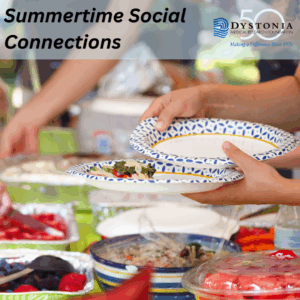
Social interaction is important for individuals with chronic health conditions like dystonia, which can be very isolating. Summertime is an opportunity for increased social connection in many ways. Communities across the country plan outdoor activities such as local festivals, art fairs, sporting events, and free concerts. Informal gatherings of friends and relatives, whether it involves a family reunion, backyard barbecue, or meeting a friend at an outdoor café, can also offer a chance to enjoy nice weather as well as the company of other people.
Enhancing social connections can help combat some of the “non-motor symptoms of dystonia,” which may include psychiatric conditions such as anxiety and depression, cognitive problems such as fatigue and impaired executive function, as well as quality of life issues like sleep disruption and pain.
According to the Centers for Disease Control and Prevention (CDC), making social connections can be challenging, especially for individuals who are in poor health, having problems with money, or living alone. A few small acts of connection can build supportive, meaningful relationships. The CDC offers the following ideas for making social connections, some of which are particularly suitable for the summer months:
- Spend more quality time with family and friends.
- Spend time with others in nature.
- Express gratitude to others.
- Volunteer with a group or organization.
- Get involved in your community.
- Get to know your neighbors.
- Join a community garden.
Interacting with other individuals impacted by dystonia can be a powerful reminder that one is not alone on their dystonia journey. The DMRF events page offers an updated list of Movers & Shakers DIY fundraisers as well as the Dystonia Zoo Day events that are planned for this year. These in-person gatherings offer opportunities for connection that can last for years to come.
 English