The mission of the Dystonia Medical Research Foundation is to advance dystonia research for more treatments and ultimately a cure, to promote awareness and education, and to support the needs and wellbeing of affected individuals and families. The DMRF is grateful to everyone in the dystonia community who contributed to these ongoing efforts, and we are proud of what we accomplished alongside members of the dystonia community in 2025:
Grants and Fellowships
DMRF-funded research has led to a better overall understanding of dystonia as well as breakthroughs in genetics and therapeutics. The funding investigators obtain from the DMRF often serves as seed money that positions them to earn more robust funding from universities or government agencies. The DMRF invested a total of $1.56 million in grants in 2025, awarding three research grants, one research fellowship, and two clinical fellowships.
Scientific Meetings
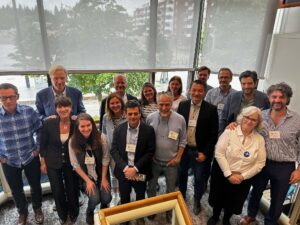
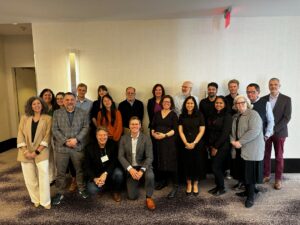
Bringing together researchers from different scientific disciplines has led to productive discussions and provided new, often surprising perspectives on dystonia. Last year the DMRF organized two scientific meetings to advance researchers’ understanding of dystonia’s origins and possible treatments. The “Mechanisms of Reduced Penetrance in Dystonia” workshop was held in Helsinki, Finland last June, and in November the DMRF hosted a meeting on “Neuromodulation in Dystonia” in Atlanta.
Community Events
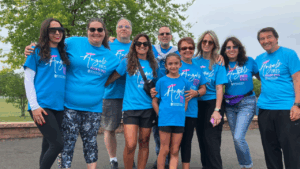
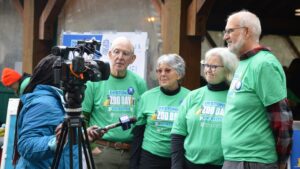
Community events are important opportunities to spread dystonia education and awareness, in addition to connecting people who have been impacted by dystonia. Local volunteer organizers and fundraisers make it all possible. Last year there were a total of 12 in-person events across the country: the Angels Walk for Dystonia, the Dystonia Warrior Ride, and ten Dystonia Zoo Day events, including the inaugural Zoo Day in Rochester, NY, which picked up local media coverage to further spread dystonia awareness.
Dystonia Support
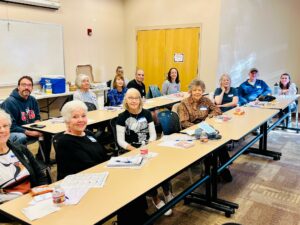
The DMRF partners with volunteers to sponsor local support groups and online support forums. In 2025 there was a total of 150 support group meetings. People with dystonia don’t have to live in a particular area to join a virtual support group. If you see a meeting on the website calendar you’d like to attend, reach out to the group leaders for more details.
Advocacy Work
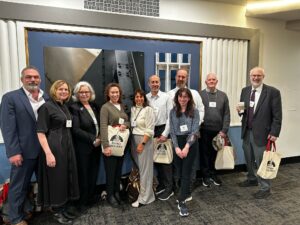
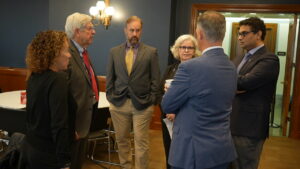
Advocates educate legislators about the needs of the dystonia community, by reaching out to government officials who decide medical research funding allocations, access to treatments, and other issues that impact people with dystonia. Members of the Dystonia Advocacy Network (DAN) made their annual visit to Washington D.C. for a Dystonia Advocacy Day in March, and group of dystonia advocates returned to Capitol Hill in September to host an educational luncheon briefing for congressional staff and stakeholders on “Recent Advancement and Emerging Opportunities in Dystonia Research.”
Webinars and Livestream Events
The DMRF has a number of webinars available on our DMRF YouTube channel, with a wide range of topics covering various aspects of patient education, mental health/self-care, dystonia treatment, and scientific research. Live webinars on “The Power of Laughter” and “What You Need to Know About Clinical Trials” were added to the content library in 2025. To cap off Dystonia Awareness Month in September, the DMRF hosted our first Virtual YOU Day, a two-hour livestream program with expert-led informational sessions, mental health check-ins, self-care tools, and open Q&A discussions, all geared toward empowering and uplifting the members of the dystonia community.
Educational Materials
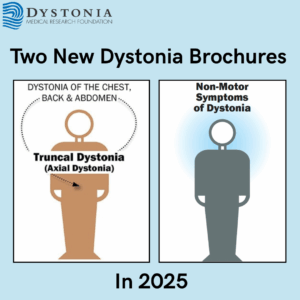
There are many different forms of dystonia, which is why the DMRF is constantly expanding our library of resources for newly diagnosed patients and health care professionals. Last year the DMRF released new brochures on Truncal Dystonia as well as the Non-Motor Symptoms of Dystonia. Both brochures are available as printed publications as well as downloadable PDFs.

 English